
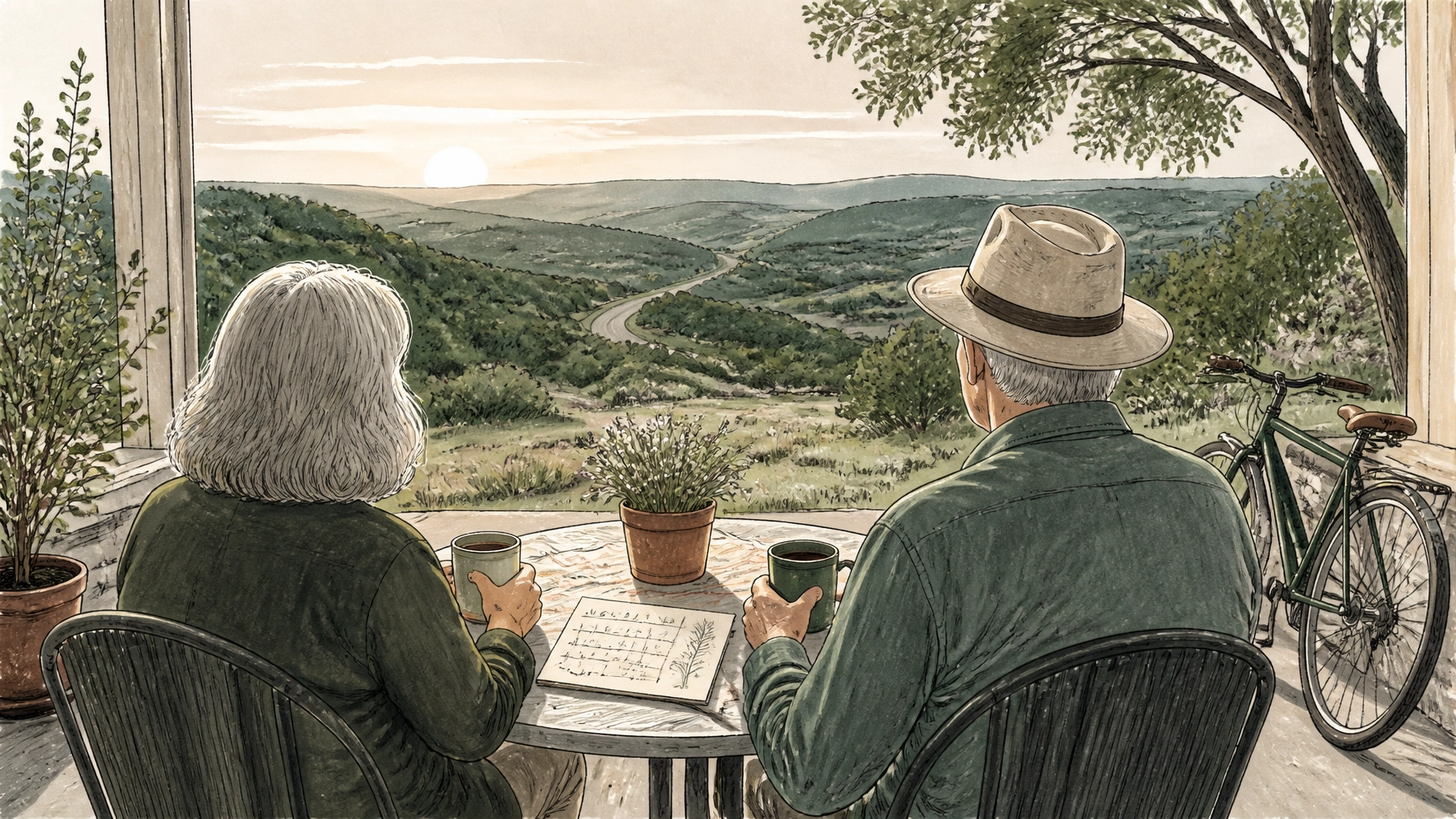
Wimberley is easy to fall in love with.
The clear water, limestone hills, creative energy, quiet roads, and relaxed pace can make retirement here feel like a long-awaited exhale. But after the moving trucks leave and the first few months settle into a routine, many retirees discover that the most important lessons are not about choosing the right neighborhood or estimating the cost of a home.
They are about learning how to live well in a place that asks you to slow down, plan ahead, participate, and accept a little more independence.
The reflections below are not meant to discourage anyone from considering Wimberley. In many cases, they explain why residents stay. These are the practical insights that can help future retirees arrive with realistic expectations and a stronger sense of what daily life may become.
“We thought we were choosing a house. We were really choosing a rhythm.”
1. The best parts of Wimberley may not fit into your first itinerary
Many prospective residents visit Wimberley with a list of attractions to see: the Square, Blue Hole, local galleries, restaurants, and nearby wineries. Those places matter, but the deeper appeal often appears in ordinary moments.
It may be a quiet Tuesday morning when a neighbor stops to talk. It may be an unplanned afternoon reading beneath a tree, a familiar face at a local café, or an evening spent watching the sky rather than checking the clock.
Visitors tend to evaluate a town by what they can do. Residents eventually evaluate it by how they feel on an ordinary day.
That distinction matters. If your retirement vision depends on constant entertainment, extensive retail, or a full calendar of organized activities, Wimberley may require an adjustment. If you value beauty, calm, creativity, and room to shape your own schedule, the town may become more rewarding over time.
Before moving, try spending several days here without following a vacation schedule. Buy groceries, run a routine errand, spend a quiet afternoon at home, and notice how the pace feels when nothing special is happening.
2. A Hill Country home can become a hobby of its own
Some retirees move to Wimberley imagining that their home will simply be a peaceful backdrop for retirement. Then they discover that the property itself may require regular attention.
Native landscaping, trees, fencing, exterior maintenance, water systems, septic considerations, wildlife, and weather-related repairs can all become part of the rhythm of owning a Hill Country property. None of these are necessarily problems. In fact, many homeowners enjoy learning the land and caring for a distinctive home.
The lesson is to understand whether you want a home that supports your lifestyle: or a home that becomes one of your primary hobbies.
A smaller property with an easier outdoor footprint may create more time for art, travel, family, or recreation. A larger lot may offer privacy and beauty but also more responsibilities. Neither choice is automatically better. The right decision depends on how you want to spend your time in your seventies and eighties, not only on how appealing the property looks on a weekend tour.

3. Convenience becomes more valuable as the years pass
Early in retirement, a longer drive can feel like part of the adventure. A trip into San Marcos or Austin may be an enjoyable outing, especially when combined with lunch, shopping, or a medical appointment.
Over time, however, retirees often become more aware of how much energy routine driving requires.
The practical question is not simply, “How far is this home from downtown?” It is:
- How far is the nearest grocery store?
- Where will you go for prescriptions?
- How long does it take to reach your preferred medical providers?
- Will you still enjoy the drive when weather or mobility changes?
- What happens if one spouse no longer wants to drive?
Wimberley’s community resources and local amenities can support a rich lifestyle, but not every home offers the same level of convenience. A location that feels wonderfully private at age 65 may feel isolated at age 80.
Consider proximity as a long-term lifestyle feature, not a compromise.
4. You need to create structure after work disappears
A slower pace is appealing until every day becomes unstructured.
Some retirees initially assume that free time will organize itself. After decades of work, commuting, family responsibilities, and scheduled obligations, it can be surprisingly difficult to move from a busy calendar to an open one.
Wimberley offers plenty of possible starting points, including art, gardening, volunteering, music, nature, and community events. But the town will not automatically build a meaningful routine for you.
A satisfying week might include:
- One recurring social activity
- One physical or outdoor activity
- One creative or learning activity
- One practical day for errands and appointments
- Plenty of unscheduled time
The goal is not to remain busy. It is to give your days enough shape that retirement feels intentional rather than empty.
The newcomer’s guide to building a social circle offers ideas for turning interests into regular connections. The important insight is that belonging usually comes from returning to the same places and activities: not from attending one large event.
5. Being welcomed is not the same as being known
Wimberley can feel friendly from the beginning, but deep relationships still take time.
New residents may receive warm greetings, discover familiar faces, and quickly find enjoyable places to visit. Yet becoming part of a community generally requires repeated participation. Friendships often grow through small, consistent interactions: volunteering for the same organization, attending a weekly gathering, joining a class, or becoming a regular at a local business.
“The best parts of Wimberley did not appear on our moving checklist.”
This is especially important for couples. One spouse may make friends quickly while the other feels less connected. Building separate interests can be healthy, even when the move was a joint decision.
Instead of waiting to be invited into an established circle, consider contributing something. Help with an event. Join a local group. Take a class. Ask a neighbor about an interest and follow up later. In a small community, showing up consistently is often more meaningful than making a strong first impression.
6. Outdoor living is seasonal, not constant
Wimberley’s natural setting is one of its greatest attractions, but outdoor retirement here may not look the same in every month.
Hot afternoons can change the best time for walking. Rain can affect trails and roads. Dry conditions can influence landscaping and outdoor water use. The City of Wimberley provides updates about Blue Hole Regional Park, including park access and seasonal swimming information, while the city’s water conservation page is a useful place to check for current guidance.
The retirees who enjoy the outdoors most are often flexible. They walk early, explore shaded areas, adjust plans during extreme weather, and appreciate indoor activities when conditions change.
A nature-focused retirement does not require doing the same outdoor activity every day. It may mean learning to observe the seasons and developing several ways to enjoy the landscape.

7. Your visitors may love Wimberley: but you still need a private life
Many retirees dream of creating a Hill Country gathering place for children, grandchildren, and friends. That can be one of the joys of owning a Wimberley home.
It can also quietly turn retirement into a permanent hosting schedule.
Before choosing a large guest-friendly property, think about how often you genuinely want visitors, how much preparation hosting requires, and whether you would rather spend your time traveling than maintaining extra bedrooms.
A home can be both welcoming and manageable. Designate guest space without allowing the entire property to revolve around occasional visitors. Establish boundaries around arrival dates, quiet time, and household responsibilities. Your retirement should support family connection without making you feel like the innkeeper.
8. Plan for flexibility instead of trying to predict everything
No one can know exactly how health, family, markets, travel preferences, or mobility will change over the next twenty years. A strong retirement lifestyle leaves room to adapt.
That may mean keeping enough accessible savings for changing needs, avoiding unnecessary financial complexity, and being thoughtful about how much of your wealth is tied up in a home or other hard-to-change commitments. Portfolio decisions should reflect your individual circumstances, with attention to liquidity, transparency, risk management, and appropriate asset allocation.
It is also wise to discuss practical contingencies before they become urgent:
- What happens if one spouse can no longer drive?
- Who will help with property maintenance?
- Where would you prefer to receive specialized care?
- Would the home still work if stairs or acreage became difficult?
- How might family responsibilities affect your plans?
These questions are not predictions of decline. They are ways to preserve choices.
9. A trial stay can reveal more than another real estate tour
One of the most useful lessons current retirees share is the value of experiencing Wimberley as a resident rather than a visitor.
A longer stay can reveal the ordinary details that a weekend cannot: seasonal weather, traffic patterns, grocery routines, social opportunities, noise levels, maintenance demands, and how often you naturally leave town.
During a trial period, try living according to your future routine. Cook at home. Attend a community activity. Visit a park on a weekday. Drive to the providers and services you expect to use. Spend time alone as well as with other people.
You may confirm that Wimberley is exactly what you hoped. You may also discover that a different location, home design, or transition timeline would suit you better. Both outcomes are valuable.
A more informed version of the Wimberley dream
The honest lessons are not that Wimberley is inconvenient, demanding, or too quiet. They are that the town rewards a particular kind of retirement: one built around participation, flexibility, nature, and appreciation for everyday life.
The retirees who feel most at home here often make decisions based on how they want to live repeatedly: not how they want to feel during a single beautiful afternoon.
That means choosing a manageable home, creating a weekly rhythm, planning for future flexibility, understanding seasonal realities, and becoming part of the community gradually.
Wimberley may not give you a ready-made retirement. It gives you the setting and the space to create one.
Schedule a private meeting with a fiduciary financial advisor today by calling (512) 593-8380 or by visiting: https://calendly.com/portafoliocapital/15min
Portafolio Capital Management dba Mau Sanchez Capital is a Registered Investment Adviser. This content is for informational purposes only and does not constitute investment advice or a solicitation to buy or sell any security. Advisory services are provided only pursuant to a written advisory agreement.
This article may include stories, scenarios, and perspectives created or assisted by artificial intelligence. Although the individuals and circumstances described may be fictional, the topics are intended to reflect real financial, personal, and lifestyle issues that retirees and individuals commonly face.
The content is provided to encourage readers to consider different perspectives that may affect their retirement, regardless of whether they are currently planning, approaching retirement, or already retired. It is intended for general educational and informational purposes only and should not be interpreted as personalized investment, financial, tax, legal, medical, or retirement-planning advice.
Individual circumstances vary. Readers should independently verify any information presented and consult appropriately qualified professionals before making financial or personal decisions. No advisory, professional, or client relationship is created through the use of this website.
Leave a Reply