
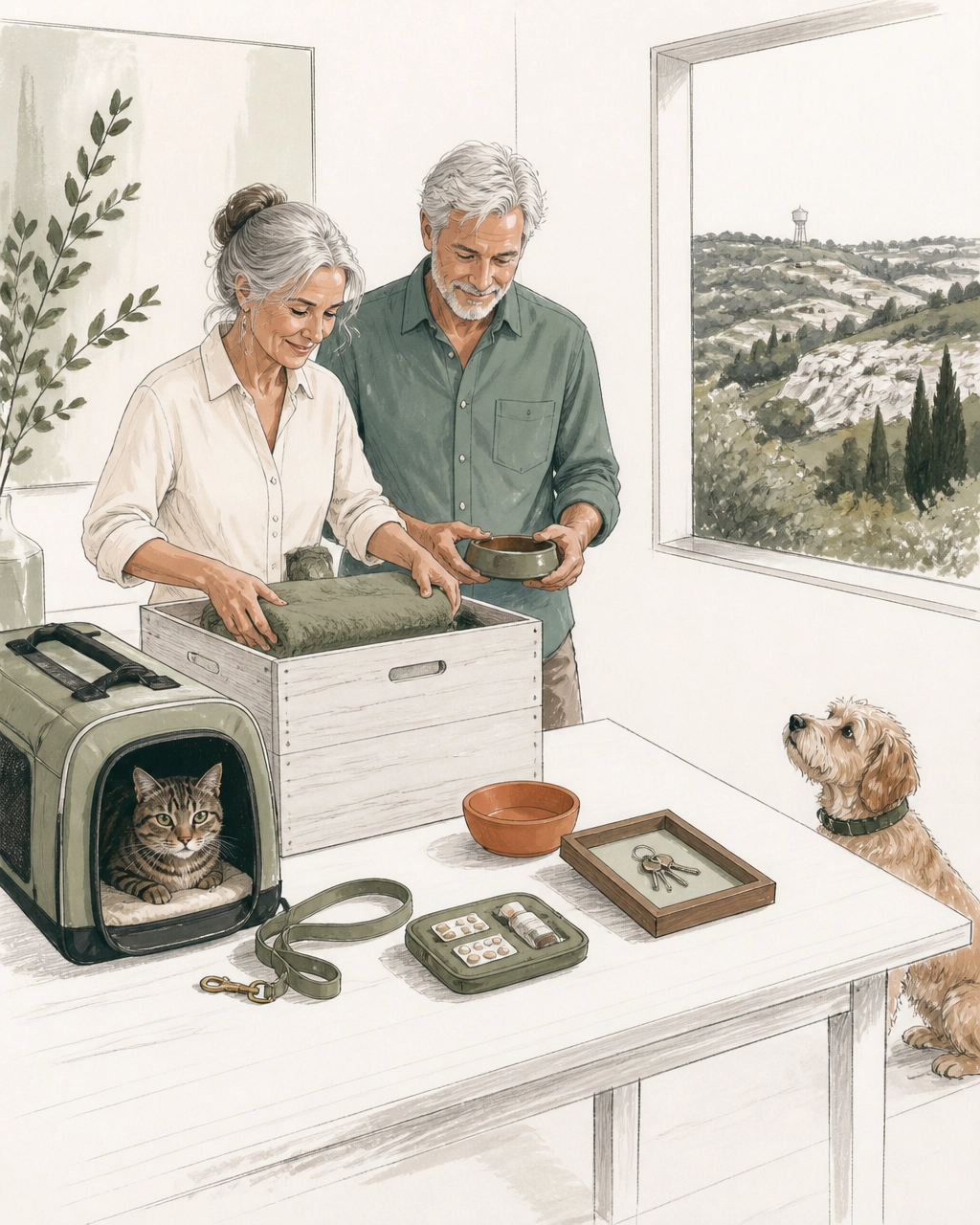
For many retirees, moving to Wimberley is not a decision made for themselves alone. Dogs and cats are part of the household, the daily routine, and often the emotional center of home life.
A successful move to the Texas Hill Country means thinking beyond boxes and closing dates. Pet owners should plan for veterinary access, secure outdoor space, hot weather, wildlife encounters, boarding, and the practical realities of traveling with animals. With thoughtful preparation, your pets can settle into Wimberley as comfortably as you do.
Start With Your Pet’s Routine, Not Just Your Moving Date
Before choosing a home or setting a moving schedule, write down what your pet needs during an ordinary week:
- How often does your dog go outside?
- Does your cat require a quiet indoor room?
- Does either pet take daily medication?
- How well do they handle car rides?
- Do they need regular grooming, boarding, or specialized care?
- Are they comfortable around livestock, wildlife, stairs, or unfamiliar people?
This inventory can help you evaluate prospective homes realistically. A beautiful Hill Country property may not be ideal if it has an unsecured driveway, steep terrain, poor shade, or no practical way to create a safe indoor-outdoor routine.
It is also helpful to gather veterinary records, medication lists, vaccination information, microchip details, current photographs, and emergency contacts before the move. Keep these items in a clearly labeled folder rather than packing them in a moving truck.
For broader planning, our guide to what urban retirees discover when moving from the city to Wimberley can help you think through the transition from a different perspective.
Establish Veterinary Access Before You Arrive
Do not wait until your pet is sick to find a veterinarian. Once your move is scheduled, contact a local clinic and ask about:
- New-patient appointments
- Wellness exams and vaccinations
- Prescription refills
- Dental care
- After-hours procedures
- Emergency referrals
- Boarding requirements
- Records-transfer procedures
Wimberley Veterinary Clinic has served the area since 1991 and provides care for cats, dogs, exotic pets, and large animals. Its website describes the practice as offering “personalized, lifelong care” throughout the Texas Hill Country.
A first appointment after your move can be useful even when your pet seems healthy. It establishes a local medical record, confirms medication dosages, and gives you an opportunity to discuss heat tolerance, parasite prevention, allergies, and any age-related concerns.
If you are relocating with horses, goats, or other livestock in addition to household pets, ask whether mobile or farm-call services are available and how quickly the clinic typically responds to large-animal needs.
Make Boarding and Pet Care Part of Your Relocation Plan
Family visits, home repairs, travel, and medical appointments do not stop after moving. Before you need overnight care, tour potential boarding facilities and ask practical questions:
- Are dogs and cats housed separately?
- What vaccinations are required?
- How are medications administered?
- Are feeding instructions followed exactly?
- How often are animals monitored?
- What happens in an emergency?
- Can anxious pets have a quieter space?
- Are trial day visits available?
Cypress Creek Animal Hospital’s boarding service invites prospective clients to contact the hospital about its policies and tour the boarding area. Wimberley Veterinary Clinic also provides overnight stays, but pet owners should confirm current availability, requirements, and nighttime procedures directly with the facility.
A short trial stay can be especially valuable for older dogs, cats that dislike change, or pets that have never been boarded. It gives you information about how your animal responds before a longer trip or family gathering.
For in-home care, interview sitters before moving day. Ask whether they are comfortable with gates, medication, senior-pet needs, and the possibility of wildlife near the property.

Evaluate Fencing, Gates, and Outdoor Access Carefully
Wimberley homes can offer more space than city properties, but acreage does not automatically equal a safe pet environment. During a property visit, inspect:
- Fence height and condition
- Gaps beneath gates
- Latches that a clever dog could open
- Shared or unfenced boundaries
- Swimming pools and water features
- Outdoor electrical equipment
- Thorny plants and sharp landscaping
- Roads, driveways, and neighboring animals
A double-gate entry can provide an extra layer of protection when guests, movers, or service providers arrive. Consider a small enclosed transition area near the front door so your dog cannot slip out when someone enters.
Cats require a different approach. A screened porch, enclosed patio, or indoor climbing and resting areas may provide stimulation without exposing them to traffic, predators, parasites, or territorial conflicts. Even cats accustomed to outdoor access may need several weeks indoors after a move so they recognize the new home as their base.
If your property includes a pool or stock tank, install barriers and supervise pets around the water. Do not assume every dog can swim, and remember that a tired or frightened animal may not be able to exit safely.
Build a Wimberley-Specific Walking Routine
A retirement lifestyle often makes daily walks easier to schedule, but Texas weather requires flexibility. During warmer months, plan dog walks for early morning or later evening. Use shaded routes and carry water when appropriate.
Pavement can become dangerously hot even when the air temperature feels manageable. Place the back of your hand on the surface for several seconds. If it is too hot for your hand, it is too hot for your dog’s paws. Grass, shaded paths, and shorter outings can reduce the risk of burns and overheating.
Senior dogs may benefit more from several brief walks than one long excursion. Watch for excessive panting, weakness, confusion, stumbling, vomiting, or collapse. These can be signs of heat-related distress. Move the pet into air conditioning and contact a veterinarian immediately if you are concerned.
Cats should generally remain indoors during peak heat. Keep fresh water available, maintain a cool indoor room, and secure window screens. Air conditioning is more dependable than a fan alone during extreme heat.
For additional general hot-weather guidance, review the ASPCA’s hot-weather safety recommendations. This information is educational and does not replace advice from your veterinarian.

Teach Wildlife Awareness From Day One
The Hill Country’s natural setting is part of Wimberley’s appeal, but pets should not be allowed to investigate every creature they encounter. Keep dogs leashed or within secure fencing, particularly at dawn, dusk, and nighttime.
Useful habits include:
- Keep pet food indoors
- Store trash in secured containers
- Remove fallen fruit from the yard
- Avoid leaving water or food outside overnight
- Keep cats indoors
- Use motion-sensitive lighting where appropriate
- Teach “leave it” and recall commands
- Carry a flashlight during evening walks
Snakes, skunks, raccoons, opossums, and other wildlife may pass through residential areas. Do not encourage pets to chase or corner animals. If your pet has a possible bite, sting, or wildlife contact, call your veterinarian promptly.
Microchipping and current identification tags are essential. Photograph your pet from multiple angles, including any distinctive markings. The City of Wimberley Animal Services page is a useful starting point for local animal-service information. You can also review regional resources for lost pets before an emergency occurs.
Prepare for the Move and Future Travel
Moving day is often the most stressful part of relocation. Keep pets away from open doors and moving crews in a quiet room with familiar bedding, water, food, and identification. A trusted sitter or boarding facility may be safer than keeping an animal in the house while furniture is being carried outside.
For a car journey:
- Use a secured crate or vehicle harness
- Bring familiar blankets and toys
- Offer water during stops
- Avoid feeding a large meal immediately before travel
- Never leave an animal in a parked vehicle
- Keep cats in carriers
- Pack medications and records separately
- Confirm the destination’s lodging rules in advance
If you will travel between states after relocating, requirements can vary by destination. The USDA APHIS pet-travel resource advises owners to check the receiving state or territory’s requirements and confirm separate airline or carrier policies. Ask your veterinarian whether a health certificate, vaccination record, or other documentation is necessary for your specific trip.

Help Your Pets Settle Into the Slower Pace
After arrival, give pets time to adjust. Start with one quiet room, then gradually introduce the rest of the house. Keep meal times, walks, and medication schedules as consistent as possible.
For dogs, begin with short supervised yard visits and leash walks. For cats, maintain indoor routines and provide hiding places, elevated perches, and familiar scents. Avoid introducing too many guests or new activities during the first few days.
A pet-friendly Wimberley lifestyle can be peaceful and rewarding: morning coffee on a shaded porch, quiet evenings near the oak trees, and a dependable rhythm built around companionship. The key is designing the move and the home around safety, comfort, and the needs of the animals who are making the journey with you.
Schedule a private meeting with a fiduciary financial advisor today by calling (512) 593-8380 or by visiting: https://calendly.com/portafoliocapital/15min
Portafolio Capital Management dba Mau Sanchez Capital is a Registered Investment Adviser. This content is for informational purposes only and does not constitute investment advice or a solicitation to buy or sell any security. Advisory services are provided only pursuant to a written advisory agreement.
This article may include stories, scenarios, and perspectives created or assisted by artificial intelligence. Although the individuals and circumstances described may be fictional, the topics are intended to reflect real financial, personal, and lifestyle issues that retirees and individuals commonly face.
The content is provided to encourage readers to consider different perspectives that may affect their retirement, regardless of whether they are currently planning, approaching retirement, or already retired. It is intended for general educational and informational purposes only and should not be interpreted as personalized investment, financial, tax, legal, medical, or retirement-planning advice.
Individual circumstances vary. Readers should independently verify any information presented and consult appropriately qualified professionals before making financial or personal decisions. No advisory, professional, or client relationship is created through the use of this website.
Leave a Reply