
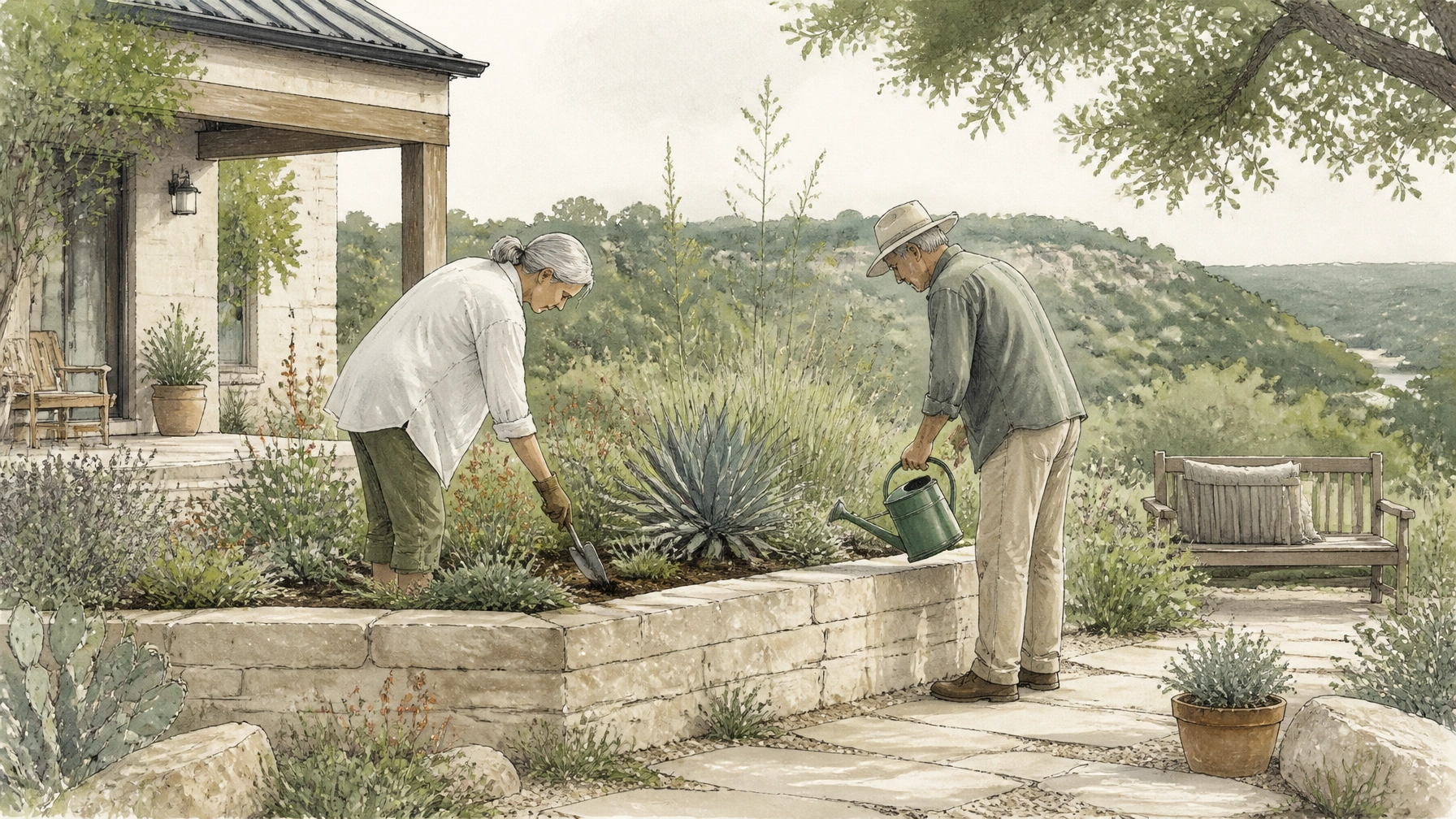
Retirement in Wimberley offers a welcome change of pace. Days can feel less scheduled, more personal, and more connected to the landscape and community around you. That slower rhythm can be wonderful: but it also helps to build movement into ordinary life.
Staying active does not have to mean intense workouts or a rigid fitness plan. In fact, many retirees find that the most sustainable approach is simply to keep moving throughout the day: tending native plants, walking with a neighbor, joining a gentle class, or spending time in the water.
The goal is not to make retirement feel like a training program. It is to preserve the strength, balance, mobility, and confidence that make everyday Hill Country living more enjoyable.
“The goal is not to do everything at once. It is to keep making movement a natural part of the life you want to live.”
1. Let Gardening Become Functional Exercise
Gardening is one of the best examples of movement that feels purposeful. Reaching, lifting, carrying, bending, standing, and walking between tasks can gently engage many parts of the body without feeling like a conventional workout.
A small garden may offer plenty of opportunities for activity:
- Planting herbs or native flowers
- Carrying a small watering can
- Pulling weeds from a seated position
- Pruning shrubs
- Raking leaves
- Moving lightweight pots
- Sweeping a patio or garden path
- Harvesting vegetables from a raised bed
The key is to work in short, comfortable intervals. Twenty minutes of gardening in the morning and another 10 minutes later in the day may feel more manageable than tackling a large project all at once.
A few adjustments can make gardening easier on the joints. Raised beds reduce the need to kneel, while a garden bench or stable stool can provide support during lower-to-the-ground tasks. Smaller tools and lighter containers can also help you avoid overloading your hands, shoulders, or back.
For Hill Country gardening ideas, the Wimberley Garden Club welcomes people interested in learning about plants that thrive in the area. The club meets on the second Wednesday of the month during its September-to-May season, with social time before the monthly speaker.
You can also visit Wimberley Gardens at 419 FM 2325 to explore Texas native plants and ask local questions about low-maintenance landscaping.
2. Turn Walking Into a Social Appointment
Walking is simple, accessible, and flexible. It can also become a reliable way to meet people after moving to Wimberley.
Instead of treating walking as something you must complete alone, consider making it a standing social appointment. A neighbor, friend, or acquaintance from a community group may be happy to meet once or twice each week for a relaxed walk.
You do not need a formal club to begin. Try creating a small walking group with two or three people and choose a consistent time:
- A short weekday walk around the neighborhood
- A morning loop near a community gathering place
- A relaxed stroll around town followed by coffee
- An evening walk during the cooler months
- A “walk and talk” appointment with a new friend
Keep the pace conversational. The purpose is not to compete or reach a particular distance. A dependable 15- or 20-minute walk can be more valuable than an ambitious plan that is difficult to maintain.
The Wimberley Community Center is a useful place to learn about local activities and organizations. It also serves as a hub for Wimberley Senior Citizens Activities, Inc., where newcomers may find other opportunities for connection.
If you are new to the area, our guide to building a social circle in Wimberley offers additional ideas for meeting people through shared interests.

3. Choose Classes That Build Confidence
A class can provide structure without making exercise feel solitary. It also gives you an easy way to meet people who are at a similar stage of life.
When reviewing local schedules, look for classes described as:
- Gentle movement
- Balance and stability
- Chair-supported exercise
- Beginner strength
- Stretching and mobility
- Tai chi
- Light resistance-band training
- Low-impact dance
A well-designed class should offer options. You should be able to sit, stand, reduce the range of motion, or use lighter resistance when needed. An instructor who welcomes questions and demonstrates modifications can help you participate with greater confidence.
When calling a community or recreation center, ask:
- Is the class appropriate for beginners?
- Are chairs or other supports available?
- Does the instructor work with older adults?
- How large is the class?
- What should a new participant bring?
- Is there an opportunity to observe before enrolling?
Schedules can change, so it is wise to confirm current details directly with the facility. The Community Center is a practical starting point for asking about local programs, meeting spaces, and senior activities.

4. Consider Water Activities for Supported Movement
Water-based activity can be appealing for retirees who enjoy movement but prefer less impact on their knees, hips, or back. The water provides support while still creating gentle resistance.
Depending on availability in Wimberley or nearby communities, possibilities may include:
- Aqua exercise
- Shallow-water walking
- Water aerobics
- Lap swimming
- Open swim
- Gentle pool-based mobility classes
You do not have to be an experienced swimmer to ask about water programs. Some classes take place in shallow water, and many facilities offer rails or other supports.
Before attending, ask about pool entry, steps, ladders, water temperature, class intensity, and whether an instructor can explain modifications. If balance is a concern, find out whether someone is available to assist with entering and exiting the pool.
Water activity can be especially useful as a seasonal option. During very warm Hill Country weather, an indoor pool may provide a comfortable way to stay active without spending extended time outdoors.

5. Build Movement Around Community
Physical activity becomes easier to maintain when it is connected to something you already enjoy. A garden club meeting, plant exchange, class, coffee date, or volunteer shift can give movement a natural place in your calendar.
For example, you might:
- Walk through a garden center while choosing plants
- Stand and stretch between gardening tasks
- Offer to help arrange chairs before a community meeting
- Walk with another volunteer before an event begins
- Attend a class with a neighbor
- Visit a local market and make several relaxed laps
- Join a plant exchange that involves carrying, sorting, and arranging small pots
These activities support more than physical strength. They can help create a sense of rhythm and belonging: especially during the first months after relocating.
Our article on finding purpose through volunteering in Wimberley explores local ways to contribute while meeting people and becoming part of the community.

A Simple Weekly Framework
A flexible week might look something like this:
- Two days: Spend 20 to 30 minutes gardening.
- Two or three days: Take a short walk with a friend or neighbor.
- One day: Attend a gentle movement, balance, or strength class.
- One day: Try a water activity if a suitable program is available.
- Most days: Break up long periods of sitting with brief standing, stretching, or household tasks.
This is only a framework, not a prescription. Some weeks may include more gardening and less walking. Other weeks may revolve around a class, a community event, or indoor activities during hot weather.
The CDC’s guidance on physical activity for older adults provides general information about movement, strength, balance, and activity levels. Before making significant changes, speak with your healthcare provider about your personal circumstances. Our Wimberley healthcare guide can also help you think through healthcare access as part of a relocation decision.
Pay attention to how you feel. Rest when needed, stay hydrated, use supportive footwear, and stop if you experience unusual pain, dizziness, chest discomfort, or shortness of breath.
Make Strength Part of the Lifestyle You Want
Everyday movement is not about proving what you can do. It is about protecting your ability to do the things that make Wimberley appealing: caring for a garden, walking into town, joining a class, visiting with neighbors, and enjoying a comfortable, independent routine.
A retirement lifestyle built around small, repeatable movements can be both active and relaxed. With a little planning, your garden, your community, and your calendar can all become supportive parts of staying strong in the Texas Hill Country.
Schedule a private meeting with a fiduciary financial advisor today by calling (512) 593-8380 or by visiting: https://calendly.com/portafoliocapital/15min
Portafolio Capital Management dba Mau Sanchez Capital is a Registered Investment Adviser. This content is for informational purposes only and does not constitute investment advice or a solicitation to buy or sell any security. Advisory services are provided only pursuant to a written advisory agreement.
This article may include stories, scenarios, and perspectives created or assisted by artificial intelligence. Although the individuals and circumstances described may be fictional, the topics are intended to reflect real financial, personal, and lifestyle issues that retirees and individuals commonly face.
The content is provided to encourage readers to consider different perspectives that may affect their retirement, regardless of whether they are currently planning, approaching retirement, or already retired. It is intended for general educational and informational purposes only and should not be interpreted as personalized investment, financial, tax, legal, medical, or retirement-planning advice.
Individual circumstances vary. Readers should independently verify any information presented and consult appropriately qualified professionals before making financial or personal decisions. No advisory, professional, or client relationship is created through the use of this website.
Leave a Reply