
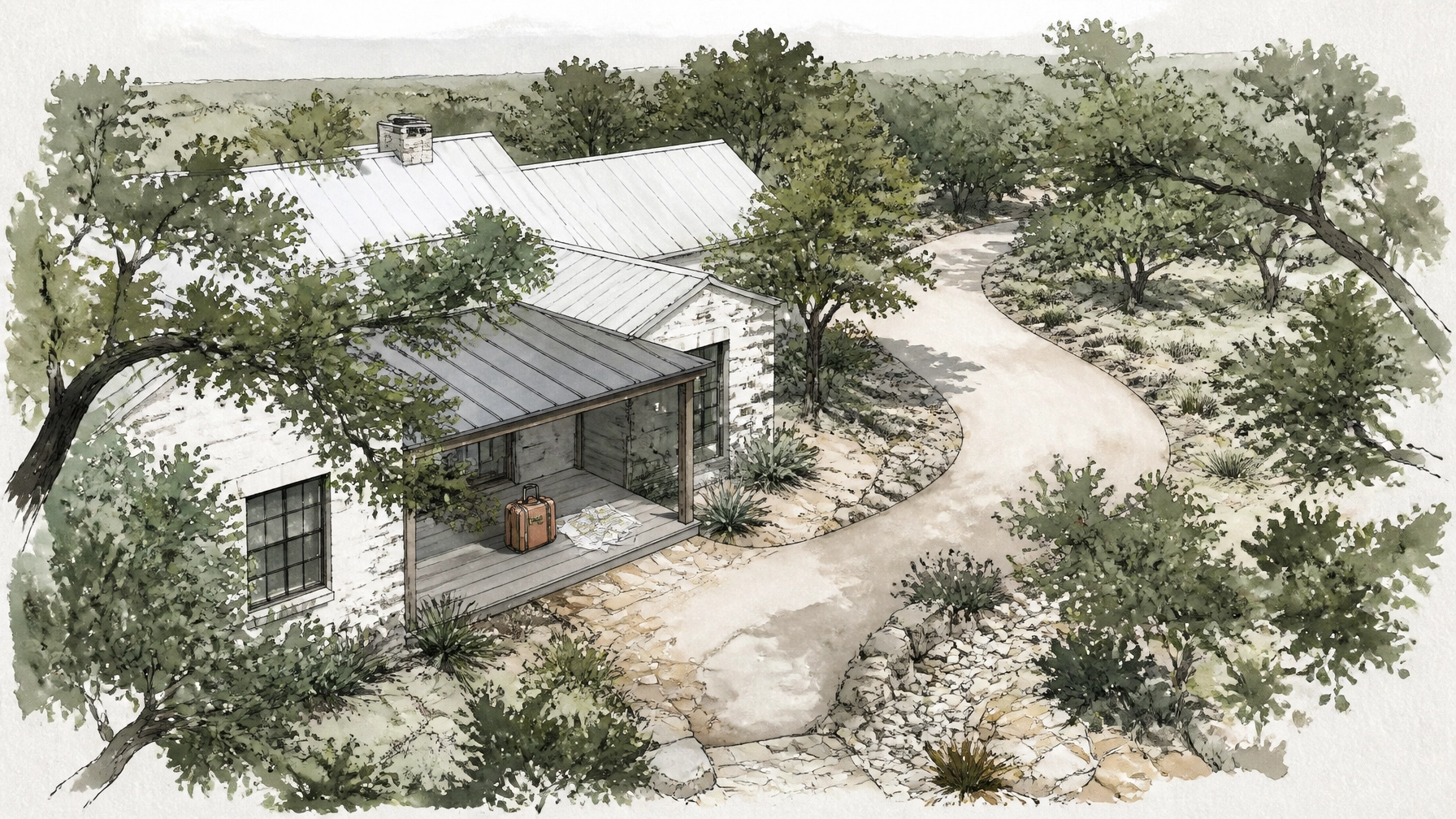
A Wimberley home can be the place where you spend spring and fall, welcome family, enjoy the Blanco River, and reconnect with the slower pace of the Texas Hill Country. Then, when the weather changes or travel calls, it can become your home base from a distance.
That arrangement can be deeply rewarding. It can also create a long list of small responsibilities: arranging maintenance, managing mail, watching for storm damage, coordinating local help, and staying connected to the people and rhythms that make Wimberley feel like home.
“A part-time home should still feel like a full-time relationship.”
The goal is not to make your Wimberley home feel automated or impersonal. It is to create a thoughtful routine that protects the property, keeps you informed, and allows you to return with anticipation instead of a long list of surprises.
Begin With a Home-in-Your-Absence Plan
Before leaving for several weeks or months, write down how the home should be cared for while you are away. A written plan is useful for you, your spouse, a neighbor, a property manager, and any service providers who may need access.
Include:
- Your departure and expected return dates
- The name and contact information of your primary local contact
- Utility shutoff locations
- HVAC settings and filter instructions
- Irrigation, landscaping, and pool-care schedules
- Alarm, camera, and smart-lock instructions
- Preferred plumbers, electricians, handymen, and other service providers
- Emergency contacts and insurance information
- Instructions for packages, deliveries, and mail
- A list of items that should be photographed during inspections
Keep one printed copy in the home and one secure digital copy. Avoid placing sensitive account numbers or passwords in an unsecured document. If someone needs access to an online account, use the platform’s authorized-user features where available.
A clear plan also helps define who is responsible for making decisions. If a water sensor alerts your local contact, should they call a plumber immediately? If a tree limb falls after a storm, who approves the repair? Clarifying these questions before departure can prevent delays and confusion.
Create a Seasonal Maintenance Rhythm
Wimberley’s Hill Country setting is part of its appeal, but it also means a home may be exposed to intense sun, heavy rain, falling branches, changing temperatures, and long periods of heat. A seasonal rhythm is more reliable than waiting for a problem to appear.
Before leaving in spring or early summer
Schedule an inspection of the air-conditioning system before extended warm weather arrives. Replace filters, confirm that condensate drains are clear, and make sure the thermostat is operating as intended.
Walk the exterior with your local contact and look for:
- Loose roof materials or damaged flashing
- Clogged gutters and downspouts
- Cracks around windows and doors
- Dry or damaged deck boards
- Trees or limbs near the roof and driveway
- Standing water around the foundation
- Irrigation leaks or broken sprinkler heads
If your home includes a pool, outdoor kitchen, well, septic system, or acreage, make sure those responsibilities are assigned to a specific person or company rather than handled informally.
Before leaving in fall or winter
Prepare the home for cooler weather and occasional freezes. Review outdoor faucet protection, exposed plumbing, insulation, and the operation of your heating system. Clear leaves from drainage areas and confirm that exterior lights are working.
For homes surrounded by trees or native landscaping, decide how often leaves, limbs, and storm debris should be removed. A tidy property is more pleasant to return to and makes it easier to notice new damage.
Schedule recurring visits
A property visit should be more than a quick glance from the driveway. Ask your local contact to walk through the home, check ceilings and cabinets for signs of moisture, verify that the HVAC system is running, and look for insects, rodents, unusual odors, or storm-related damage.
A brief photo report after each visit can provide useful reassurance. Ask for pictures of the main living areas, mechanical spaces, exterior elevations, and any issue that needs attention. This creates a simple record of the home’s condition over time.
Make Mail and Deliveries Predictable
Mail is one of the easiest ways for an empty home to look empty. It can also create practical problems when important documents, prescriptions, packages, or financial statements accumulate at the front door.
For shorter absences, the USPS Hold Mail service can pause delivery for between three and 30 days. For longer stays away, USPS provides temporary forwarding options for periods from 15 days up to one year through its Change of Address and Forward Mail service.
Remember that a USPS change of address only changes delivery with the Postal Service. You may still need to update banks, insurers, government agencies, medical providers, subscriptions, and other organizations separately.
A practical split-year mail system may include:
- A defined primary mailing address: Decide which address should receive important statements and official correspondence.
- Digital delivery where appropriate: Enroll in paperless statements for accounts that offer secure electronic access.
- A package plan: Pause nonessential deliveries before departure and arrange for a trusted person to collect anything unexpected.
- A local check: Ask your home contact to remove flyers, notices, and visible packages during each visit.
- A return-date review: When you come back, check whether any mail was forwarded, held, or returned so you can update senders as needed.
This is especially important if you travel between more than two locations. The fewer places that receive sensitive or time-sensitive mail, the easier it is to manage your household administration.

Protect the Home Without Creating Complexity
Security during split-year living does not require an elaborate system. It requires several simple layers that work together.
Start with the basics:
- Lock doors, windows, garages, gates, and secondary entrances.
- Keep spare keys with a trusted person rather than in an obvious outdoor hiding place.
- Use timers or smart controls for a few interior and exterior lights.
- Keep landscaping maintained so the property does not appear neglected.
- Remove newspapers, door hangers, and packages promptly.
- Avoid sharing detailed travel dates publicly while you are away.
Smart-home tools can add useful visibility. A connected thermostat can show whether the HVAC system is operating. Door and window sensors can notify you of unexpected activity. Water sensors near the water heater, washing machine, sinks, refrigerator line, and HVAC drain can alert you to a problem before a small leak becomes a major one.
The most important part is the response plan. A notification on your phone is not enough if you are several states away. Your local contact should know where the main water shutoff is located, how to access the home, and which service provider to call.
Test the entire system before leaving. Confirm that alerts reach both you and your local contact. Have the contact practice entering the home, disarming the alarm, and locating shutoffs. A system that is never tested is only a collection of assumptions.
Keep Your Community Connection Alive
A seasonal home is more satisfying when it remains part of your community even during the months you are gone. Staying connected does not require attending every event or maintaining a packed calendar. Small, consistent habits can preserve relationships.
Before leaving, let close neighbors know when you expect to return. Share an appropriate emergency contact method and ask whether there is anything you should know about upcoming neighborhood work, road projects, or local conditions.
You can also:
- Continue attending a recurring club or volunteer meeting when you are in town.
- Stay in touch with neighbors through a short monthly message.
- Follow local organizations and community updates online.
- Make plans for your first week back before you leave.
- Support local businesses during your visits rather than trying to do everything in one trip.
- Invite friends or neighbors for a simple coffee, porch conversation, or casual meal when you return.
The Wimberley newcomer’s guide to building a social circle offers several examples of community activities, interest groups, and gathering places that can help seasonal residents maintain a sense of belonging.
It can also help to keep a personal “return calendar.” Mark the farmers’ markets, arts events, local gatherings, and outdoor activities you hope to enjoy during each visit. The Wimberley seasonal events calendar can provide ideas as you plan around the changing year.

Prepare for a Calm Return
The return home should be part of the plan, not an afterthought. A week before arrival, ask your local contact to confirm that the home is secure, the utilities are operating, the refrigerator and pantry are ready, and any scheduled repairs are complete.
You may want to arrange:
- A basic cleaning
- Fresh linens and towels
- HVAC filter replacement
- Pool or spa service
- Lawn or landscape maintenance
- Grocery delivery
- Trash and recycling collection
- Mail retrieval
- A vehicle check if one remains at the home
When you arrive, walk through the home before unpacking. Check for leaks, unusual sounds, pests, storm damage, and changes in temperature or humidity. If you have maintained visit reports, compare the home’s condition with the last report.
This process makes the transition from travel mode to Wimberley life much smoother. Instead of spending your first several days solving preventable problems, you can return to morning walks, local meals, art galleries, and time with friends.

Let the Arrangement Support Your Retirement Lifestyle
Split-year living works best when the practical responsibilities are visible and manageable. A maintenance schedule, reliable local contact, mail plan, security routine, and community calendar can turn an occasionally empty house into a well-cared-for home that remains connected to your life.
Your financial plan has a role as well: not in replacing local relationships or household systems, but in helping you understand how travel, property expenses, home improvements, and seasonal living fit together. For many retirees, that means considering liquidity, transparent costs, appropriate asset allocation, and a portfolio designed around their own income needs and lifestyle priorities.
The right arrangement is personal. Some homeowners prefer to coordinate every service themselves. Others value a single local point of contact who can organize routine visits and communicate when something needs attention. What matters is that the system matches your comfort level and allows you to enjoy Wimberley without feeling tethered to the property.
Schedule a private meeting with a fiduciary financial advisor today by calling (512) 593-8380 or by visiting: https://calendly.com/portafoliocapital/15min
Portafolio Capital Management dba Mau Sanchez Capital is a Registered Investment Adviser. This content is for informational purposes only and does not constitute investment advice or a solicitation to buy or sell any security. Advisory services are provided only pursuant to a written advisory agreement.
This article may include stories, scenarios, and perspectives created or assisted by artificial intelligence. Although the individuals and circumstances described may be fictional, the topics are intended to reflect real financial, personal, and lifestyle issues that retirees and individuals commonly face.
The content is provided to encourage readers to consider different perspectives that may affect their retirement, regardless of whether they are currently planning, approaching retirement, or already retired. It is intended for general educational and informational purposes only and should not be interpreted as personalized investment, financial, tax, legal, medical, or retirement-planning advice.
Individual circumstances vary. Readers should independently verify any information presented and consult appropriately qualified professionals before making financial or personal decisions. No advisory, professional, or client relationship is created through the use of this website.
Leave a Reply