
A retirement move to Wimberley can begin with a house search, a change of address, and a long list of practical decisions. But settling into the Hill Country is about more than unpacking boxes. Over time, a place becomes home through repetition: the Saturday morning walk you take in spring, the first swim you look forward to in summer, the familiar route you drive when the hills turn gold in fall.
These are not necessarily special occasions. They may never appear on a community calendar. They are smaller and more personal: rituals that give shape to the year and help a new resident feel rooted.
Wimberley offers an especially rich setting for this kind of life. The Blanco River, Cypress Creek, Blue Hole Regional Park, local galleries, tasting rooms, gardens, and historic downtown all provide natural markers for the changing seasons. The goal is not to fill every weekend. It is to notice what each season invites you to do, then return to those experiences often enough that they become part of your identity.
“A home becomes a life through the things we return to.”
Winter: Make room for quiet
Winter in Wimberley can be a welcome reset after a busy year. The days are often mild enough for a walk, while cooler evenings encourage a slower pace indoors.
This is a good season to establish a simple morning ritual. You might begin with coffee at home, take a walk near Cypress Creek, and spend an hour browsing the shops or galleries around Wimberley Square. In a larger city, this kind of unhurried morning can feel like an indulgence. In Wimberley, it can become ordinary: and that is part of its appeal.
Winter is also a natural time for creative pursuits. Set aside a regular afternoon for reading, painting, journaling, or attending a gallery opening. You may find that the arts become less about occasional entertainment and more about a steady thread running through your year.
For retirees, this quieter season can also provide an opportunity to review the rhythms of daily life. Are you spending enough time outdoors? Are you maintaining connections with friends and family? Does your home support the way you actually want to live?
A seasonal review does not need to become a formal project. It might be as simple as sitting at the kitchen table with a notebook and asking, “What did I enjoy returning to this year?”
Spring: Follow what is beginning
Spring changes the texture of Wimberley. Native plants return, mornings become easier to spend outdoors, and the landscape begins to show more color.
For many residents, spring is an ideal time to begin or renew a gardening ritual. A small native-plant bed, a container garden, or even a few herbs near the kitchen door can connect you to the Hill Country in a tangible way. Gardening in this region requires patience and observation. Limestone, heat, deer, and changing rainfall all encourage a different approach than a traditional suburban garden.
Rather than trying to control every outcome, you learn what belongs where.

Spring can also be the season for a weekly nature habit. Choose one trail at Blue Hole Regional Park or another nearby preserve and visit it regularly. The purpose is not to conquer distance or collect destinations. It is to notice what changes from week to week: the return of birds, the growth of grasses, the sound of water, or the way light falls through the trees.
If you are considering a move, this kind of repeated visit can be revealing. A weekend in Wimberley may show you the scenery. Returning to the same places across several months can help you understand the lifestyle.
Summer: Build the day around shade and water
Texas summer asks residents to be intentional. The heat changes when you walk, when you exercise, and when you socialize. Rather than resisting the season, many people create a daily pattern around it.
A summer ritual might begin early: a walk before the temperature rises, a visit to a local café, or time in the garden while the air is still comfortable. Afternoon plans can move toward shade, a cool interior, or the water. Blue Hole and the Blanco River become not simply destinations but reference points in the week.
If you enjoy swimming, you might choose a recurring day for a Blue Hole visit during the park’s operating season, checking current access and reservations through the official Blue Hole Regional Park information page. If swimming is not your preference, the same seasonal rhythm can include a shaded picnic, a quiet book beneath the trees, or a short creekside walk at a cooler hour.
Summer evenings offer another kind of ritual. A simple dinner on the porch, live music at a local venue, or a drive through the hills before sunset can become a dependable way to end the day. The point is not to seek constant novelty. It is to create a pattern that feels both enjoyable and sustainable.
For people relocating from a faster-paced city, this can be one of the most meaningful adjustments. A full day does not have to be a highly productive day. It can be a day with enough space to notice the sky.
Fall: Revisit familiar places with new eyes
Fall often feels like an exhale in the Texas Hill Country. Cooler mornings make longer walks more comfortable, and the changing light invites scenic drives, outdoor meals, and time on a patio.
This can be the season for a personal “return route.” Choose a favorite drive through the Wimberley Valley, stop for coffee, visit a gallery, and end with a tasting or meal at a local vineyard or restaurant. Repeat the route each year, allowing it to change naturally as your interests and relationships evolve.

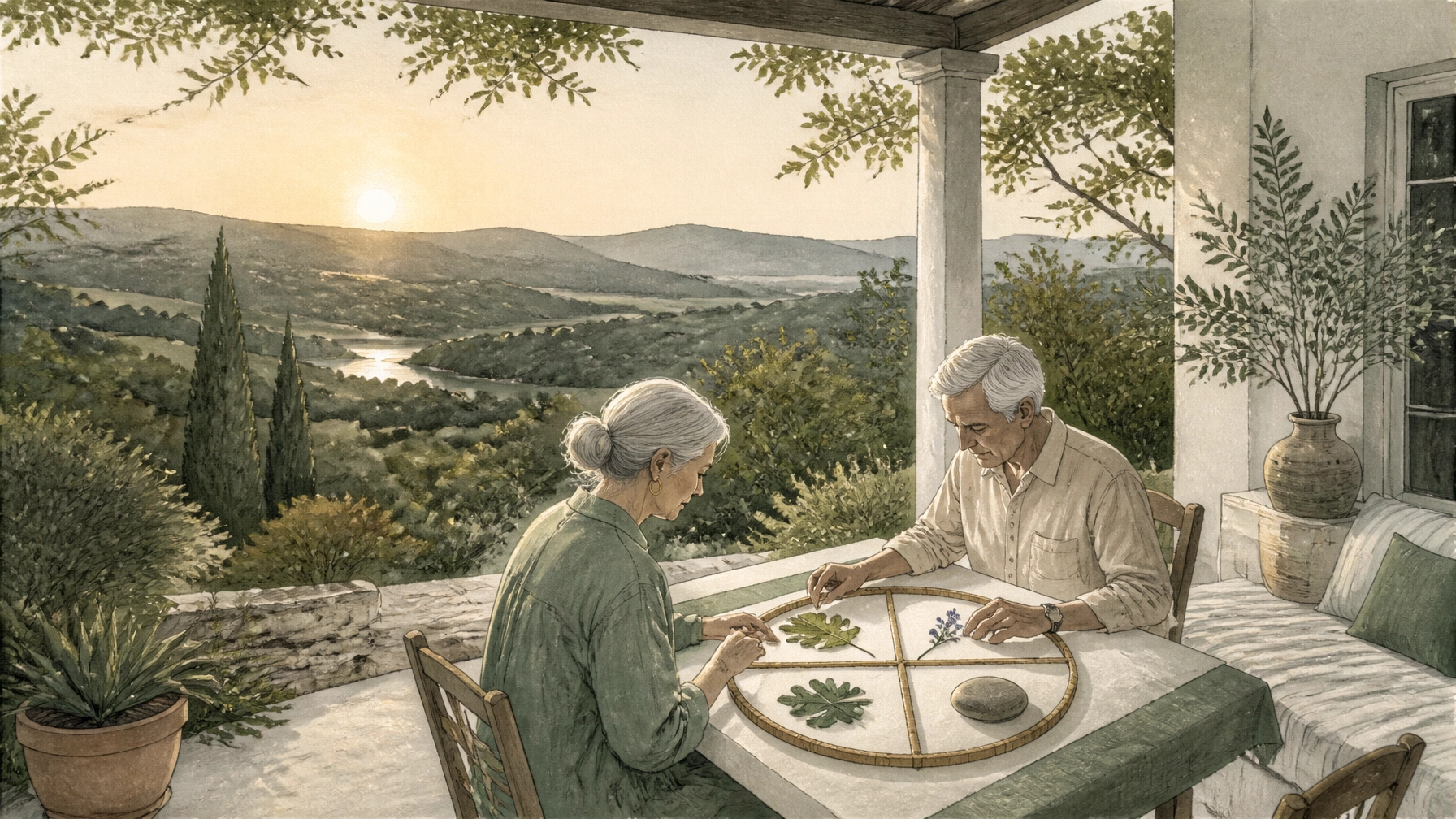
Fall is also a good time to document the year. You might keep a short seasonal journal, create a photo-free sketchbook of places you visited, or collect a few meaningful objects: a river stone, a seed packet, a recipe, or a handwritten note from a friend.
These practices can be especially valuable in retirement because they give structure without imposing pressure. A recurring fall reflection helps you recognize that a year is not only measured by major milestones. It is also made up of mornings, conversations, meals, and familiar views.
The spaces between seasons matter, too
Wimberley’s lifestyle is not divided neatly into four chapters. Some of the best parts happen in transition.
The first cool evening after a hot summer may prompt a walk that had been postponed for weeks. A warm winter afternoon may feel like an early preview of spring. A sudden rain can change the river, the trails, and the way the hills look from your window.
These in-between moments are reminders to stay flexible. Retirement is often described as a new beginning, but it is also a chance to develop a more responsive relationship with time. Instead of asking what you should accomplish next, you can ask what the day is offering.
That might mean shifting a planned hike to an earlier hour, inviting neighbors over for an informal meal, or spending an afternoon at home when the weather calls for it.
Let your financial plan support the life you want to repeat
A seasonal lifestyle is easier to enjoy when your financial plan is designed around your actual priorities. That may include maintaining a Hill Country home, traveling to see family, supporting charitable causes, or having enough liquidity for ordinary surprises.
The goal is not to make every lifestyle decision a financial exercise. It is to create a clear structure that supports your choices. For many retirees, that means emphasizing transparent and liquid publicly traded investments, thoughtful asset allocation, and risk management through portfolio construction. A client-specific approach can help avoid unnecessary complexity, excessive fees, and restrictions that make it harder to access money when life changes.
This is also where a relocation conversation can be useful. The cost of a home is only one part of settling into Wimberley. Consider the ongoing expenses of maintenance, transportation, healthcare, hobbies, travel, and hospitality. A realistic plan can help you enjoy the rituals you value without turning every invitation or home project into a source of anxiety.
You can explore more practical relocation considerations in From City to Country: What Urban Retirees Discover When They Move to Wimberley, and learn how lifestyle decisions fit into broader readiness in Lifestyle vs. Financial Readiness: How to Know When You’re Really Ready to Retire in Wimberley.
Making a life, one return at a time
The deepest appeal of retiring in Wimberley may not be any single attraction. It is the opportunity to develop a life with a recognizable rhythm.
Winter can give you quiet mornings. Spring can bring gardening and new walks. Summer can center the day around shade, water, and long evenings. Fall can invite reflection, scenic drives, and a return to favorite places.
Over the years, these repeated experiences become a personal calendar. You remember where you were when the first wildflowers appeared, which porch hosted your favorite summer dinner, and how the hills looked on the first cool morning of autumn.
That is how a relocation becomes belonging: not all at once, but season by season.
Schedule a private meeting with a fiduciary financial advisor today by calling (512) 593-8380 or by visiting: https://calendly.com/portafoliocapital/15min
Portafolio Capital Management dba Mau Sanchez Capital is a Registered Investment Adviser. This content is for informational purposes only and does not constitute investment advice or a solicitation to buy or sell any security. Advisory services are provided only pursuant to a written advisory agreement.
This article may include stories, scenarios, and perspectives created or assisted by artificial intelligence. Although the individuals and circumstances described may be fictional, the topics are intended to reflect real financial, personal, and lifestyle issues that retirees and individuals commonly face.
The content is provided to encourage readers to consider different perspectives that may affect their retirement, regardless of whether they are currently planning, approaching retirement, or already retired. It is intended for general educational and informational purposes only and should not be interpreted as personalized investment, financial, tax, legal, medical, or retirement-planning advice.
Individual circumstances vary. Readers should independently verify any information presented and consult appropriately qualified professionals before making financial or personal decisions. No advisory, professional, or client relationship is created through the use of this website.
Leave a Reply