
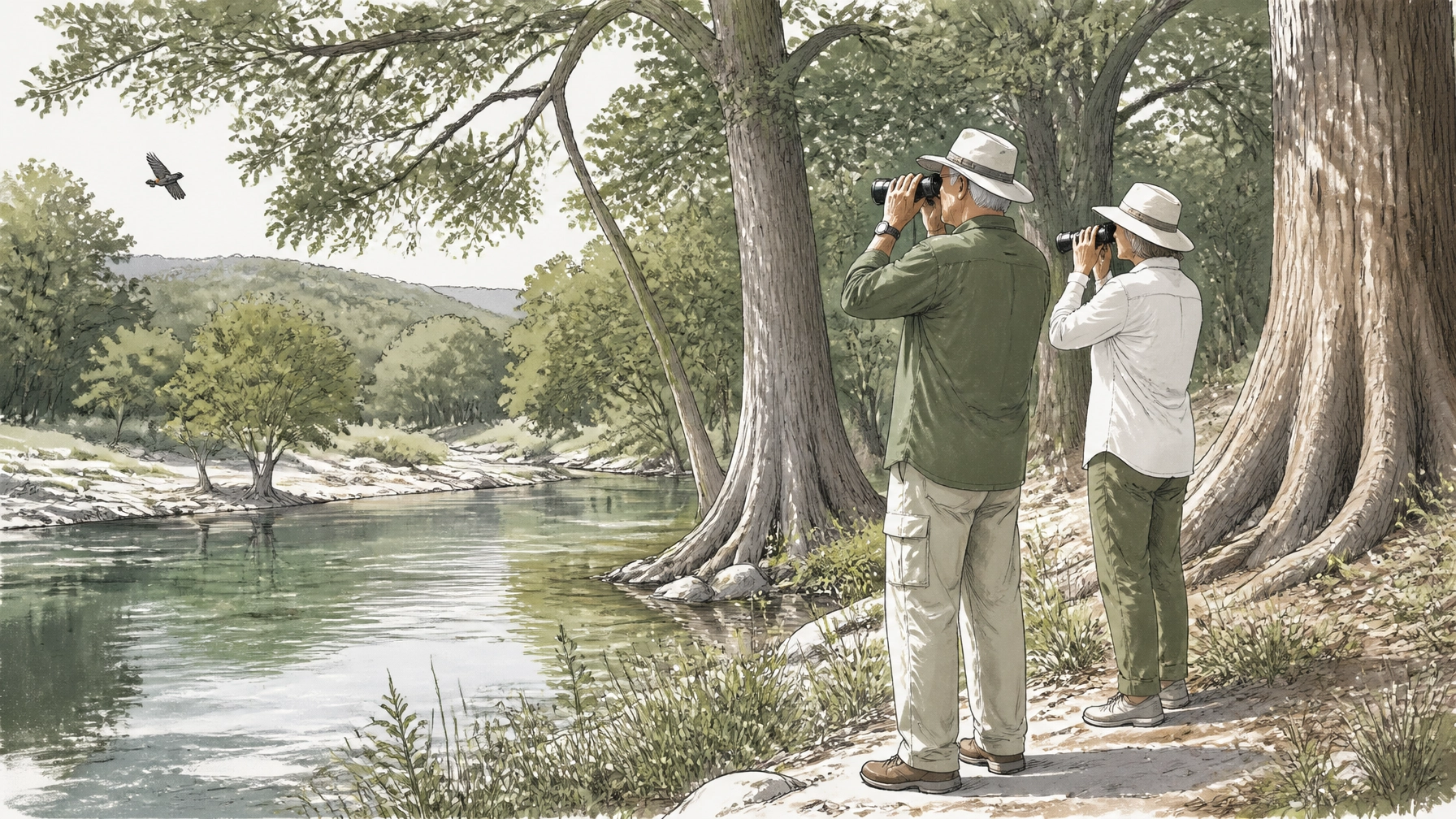
For many, the dream of a Wimberley retirement is built on images of slow mornings, shaded porches, and the quiet rustle of cypress leaves. But for those who have already made the move to the Texas Hill Country, the real magic often happens in the canopy above. Wimberley isn’t just a charming town with a historic square; it is a vital sanctuary within the Central Flyway, serving as a seasonal home and a migratory pitstop for some of North America’s most stunning avian species.
Whether you are a seasoned "birder" with a high-end spotting scope or someone who simply enjoys the flash of color at a backyard feeder, the Wimberley Valley offers a front-row seat to nature’s most delicate performances.
Why Wimberley is a Birdwatcher’s Paradise
Wimberley sits at a unique ecological crossroads. The combination of the Edwards Plateau’s rugged limestone hills and the lush, riparian corridors of the Blanco River and Cypress Creek creates a diverse array of habitats. This diversity is what supports such a wide variety of wildlife, from the endangered Golden-cheeked Warbler to the strikingly colorful Painted Bunting.
For retirees, birdwatching often becomes more than just a hobby; it’s a way to connect with the local community and find a sense of peace that is often missing from more urban environments. As we noted in our guide to finding your tribe in Wimberley, many residents find their social circles through local conservation groups and nature walks.
"In every walk with nature, one receives far more than he seeks." : John Muir
Species to Spot: The Stars of the Hill Country
If you are planning your Texas Hill Country lifestyle, familiarizing yourself with the local residents is a great place to start. Here are a few species that define the Wimberley experience:
The Painted Bunting
Often called the "nonpareil" (without equal), the male Painted Bunting looks as though it was painted by a child with a full palette of primary colors. They arrive in late spring and stay through the summer, frequently visiting feeders that offer white proso millet.

The Golden-cheeked Warbler
This tiny, yellow-faced songbird is a true local celebrity. It is the only bird species with a breeding range entirely restricted to the oak-juniper woodlands of Central Texas. Because it is an endangered species, seeing one is a rare and special treat, often requiring a visit to protected areas like the Jacob’s Well Natural Area.
The Scissor-tailed Flycatcher
Known for its incredibly long, forked tail, this bird is a master of aerial acrobatics. You will often see them perched on fences or power lines along Ranch Road 12, waiting to swoop down and catch an insect mid-air.
Prime Locations for Wildlife Observation
You don't have to go far to find wildlife in Wimberley. In fact, some of the best spots are right in the heart of town.
1. Patsy Glenn Refuge
Located right next to the Wimberley Community Center, this 1.8-acre refuge is a testament to the town’s commitment to nature. It features a bird blind, a small pond, and several nesting boxes. It’s an ideal spot for a quiet morning walk before heading to the Square for coffee.
2. Cypress Creek Nature Preserve
Less than 100 yards from the bustle of the Wimberley Square, this preserve offers 7.2 acres of untouched habitat. The ancient bald cypress trees that line the creek are home to owls, hawks, and a variety of migratory songbirds.
3. The Blanco River
The banks of the Blanco River offer a different ecological profile. Here, you are more likely to see water-associated species like the Great Blue Heron or the Belted Kingfisher. The river is the lifeblood of the valley, and its corridor is "teeming with birdlife" during the peak migration seasons.

A Seasonal Guide to the Wimberley Sky
One of the joys of a Wimberley retirement is witnessing the distinct change in seasons through the movement of birds.
- Spring (March–May): This is the peak. The "parade of migrants" brings warblers, tanagers, and hummingbirds back to the hills. The hillsides are alive with song and color.
- Summer (June–August): The resident breeders take center stage. This is the best time to see Painted Buntings and Scissor-tailed Flycatchers raising their young.
- Fall (September–November): As the temperatures dip, the migration begins again, this time headed south. It's a second peak for diversity, often accompanied by the sight of Sandhill Cranes flying high overhead.
- Winter (December–February): While quieter, winter brings its own rewards. Cedar Waxwings descend in large, social flocks to feed on juniper berries, and raptors like the Northern Harrier become more visible in the open fields.
Integrating Nature into Your Retirement Plan
For many of our clients, moving to Wimberley is a choice to prioritize quality of life. Whether you are coming from a high-stress corporate career in Houston or downsizing from a large estate in Dallas, the shift to a nature-focused lifestyle requires a bit of planning.
Living in the Hill Country often means managing larger tracts of land or navigating the unique considerations of riparian property. We often discuss these lifestyle assets in our Wealth Management Playbook for Hill Country Living, ensuring that your financial strategy supports your desire for a peaceful, nature-filled retirement.

Tips for the Aspiring Wimberley Birder
- Invest in Good Optics: A decent pair of 8×42 binoculars will change your experience entirely.
- Go Early or Late: Wildlife is most active at dawn and dusk. The "Golden Hour" in Wimberley isn't just good for photos; it's when the woods come alive.
- Use Native Plants: If you want to see birds from your back porch, plant native species like Turk’s Cap or Salvia to attract hummingbirds and butterflies.
- Join the Community: The Wimberley Birding Society is a fantastic resource for newcomers looking to learn the local calls and hotspots.
Retiring in the Texas Hill Country is about more than just a change of address; it’s about a change of pace. When you stop to watch a hawk circle the valley or listen to the first whistle of a Northern Cardinal in the spring, you realize that the best parts of life in Wimberley aren't bought: they are discovered.

If you are considering a move and want to ensure your financial plan is as well-organized as your new life in the hills, we are here to help.
Schedule a private meeting with a fiduciary financial advisor today by calling (512) 593-8380 or by visiting: https://calendly.com/portafoliocapital/15min
Portafolio Capital Management dba Mau Sanchez Capital is a Registered Investment Adviser. This content is for informational purposes only and does not constitute investment advice or a solicitation to buy or sell any security. Advisory services are provided only pursuant to a written advisory agreement.
This article may include stories, scenarios, and perspectives created or assisted by artificial intelligence. Although the individuals and circumstances described may be fictional, the topics are intended to reflect real financial, personal, and lifestyle issues that retirees and individuals commonly face. The content is provided to encourage readers to consider different perspectives that may affect their retirement, regardless of whether they are currently planning, approaching retirement, or already retired. It is intended for general educational and informational purposes only and should not be interpreted as personalized investment, financial, tax, legal, medical, or retirement-planning advice. Individual circumstances vary. Readers should independently verify any information presented and consult appropriately qualified professionals before making financial or personal decisions. No advisory, professional, or client relationship is created through the use of this website.
Leave a Reply